
Reviews | PORTFOLIO 2022-2023
|
#10/2023 (US)
This article originally appeared in Issue 47:2 (Nov/Dec 2023) of Fanfare Magazine. |

 Nov/Dec 2023 | Jerry Dubins | FANFARE Magazine - Issue 47:2 |
 |
#9/2023 (FR)
Un jour que je discutais à bâtons rompus avec Henryk Szeryng de ses divers enregistrements du Concerto de Brahms, il me coupa. « Vous connaissez le Concerto de Hahn ? Je vais le créer l’année prochaine aux Etats-Unis. »Il avait fait bien plus, en retrouvant le manuscrit à la Bibliothèque Nationale de Caracas, perçant enfin le mystère de cette œuvre qui n’avait plus été jouée depuis sa création fugitive en 1927, malgré sa dédicace à Jules Boucherit et l’amitié qui liait le compositeur à une autre violoniste, Denise Soriano, avec laquelle il enregistra sa Sonate. Durant ses études à Paris, Szeryng entendit parler de ce « concerto fantôme » par Gabriel Bouillon, son professeur au Conservatoire.Miracle !, la création américaine de l’œuvre à Atlanta le 20 novembre 1987, la voici, de plus dans un son remarquable, Henryk Szeryng faisant assaut de traits enthousiastes dans le Décidé initial (que le public applaudit), ardant le Chant d’amour, amours probablement interdites. Le Final contraste un Lent élégiaque avec un presto (Vif et léger) qui raille, petite merveille d’esprit très parisien. L’archet est toujours magnifique, la justesse encore certaine, mais Henryk Szeryng se doute-t-il qu’il est à quelques mois de la mort qui le prendra sans prévenir le 3 mars de l’année suivante ?Rhine Classics ajoute deux échos d’un concert donné au temps de la splendeur du violoniste polonais le 17 janvier 1974 à Boston avec le jeune Michael Tilson Thomas. Plus que pour le Troisième Concerto de Paganini, qu’il aura retrouvé en 1967 dans les archives en désordre de Giuseppina, l’arrière-petite-fille du compositeur, et « arrangé » en s’écrivant au passage une fabuleuse cadence dont il ne fait ici qu’une bouchée, c’est l’estompe du Poème de Chausson qui saisit, témoignage de ce style si spécifique de l’école franco-belge de violon, dont après Henryk Szeryng, seul Augustin Dumay aura été l’ultime récipiendaire. One day, while I was chatting casually with Henryk Szeryng about his various recordings of the Brahms Concerto, he interrupted me. “Are you familiar with the Hahn Concerto? I’m going to premiere it next year in the United States.”He had done much more, having rediscovered the manuscript at the National Library of Caracas, finally unraveling the mystery of this work, which hadn’t been performed since its brief premiere in 1927, despite its dedication to Jules Boucherit and the composer’s friendship with another violinist, Denise Soriano, with whom he recorded his Sonata. During his studies in Paris, Szeryng first heard about this “phantom concerto” from Gabriel Bouillon, his professor at the Conservatory.Miracle! The American premiere of the work in Atlanta on November 20, 1987, is presented here, moreover in remarkable sound quality. Henryk Szeryng unleashes a torrent of enthusiastic flourishes in the opening "Décidé" (which the audience applauds), and ignites the passion of the "Chant d'amour," a song of probably forbidden love. The Finale contrasts an elegiac "Lent" with a playful "Presto" ("Vif et léger"), a small marvel of very Parisian wit. The bowing is still magnificent, the intonation still certain, but did Henryk Szeryng suspect that he was just months away from the death that would take him without warning on March 3 of the following year?Rhine Classics adds two recordings from a concert given during the Polish violinist's heyday on January 17, 1974, in Boston with the young Michael Tilson Thomas. More than for Paganini’s Third Concerto, which he rediscovered in 1967 in the disordered archives of Giuseppina, the composer’s great-granddaughter, and “arranged” by writing himself a fabulous cadenza in the process, which he makes short work of here, it is the subtlety of Chausson’s Poème that captivates, a testament to that very specific style of the Franco-Belgian school of violin, of which after Henryk Szeryng, only Augustin Dumay was the last recipient. [JCH] |

 22 April 2023 | Jean-Charles Hoffelé | ARTAMAG' - Focus - Le disque du jour |
 |
#8/2023 (FR)
March 2023 | Jean-Charles Hoffelé | "Trésors d'archets" | CLASSICA n°250 p.83 | HEIFETZ Legendary NY, SZERYNG reDiscovered [CHOC - Exceptionnel]; SZERYNG Live in USA [☆☆☆☆☆ - Coup de coeur]; GITLIS [☆☆☆☆ - Excellent]
|


|
#07/2023 (UK)
21 February 2023 | Stephen Greenbank | MusicWeb International | Christian Ferras (violin) à la mémoire d’un ange - rec. 1946-1971 The title of this 5 CD dedicated to French violinist Christian Ferras is ‘à la mémoire d’un ange’. It’s the title Alban Berg gave to his Violin Concerto, a work Ferras performed many times, but it could also apply to the violinist himself. The set was issued to commemorate the 40th anniversary of his tragic death in September 1982. [...] This intriguing cache of live recordings makes a positive and welcome addition to the violinist’s already extensive discography. All is derived from well-preserved source material, and some applause has been retained to capture the atmosphere of the live event. The producer, Emilio Pessina, has provided an excellent biographical portrait of the artist in the accompanying booklet. |

|
#06/2023 (UK)
19 January 2023 | Jonathan Woolf | MusicWeb International | Sergio Fiorentino (piano) - Early Live and Unissued Takes This single disc covers a period of some 15 years in Fiorentino’s career, delving right back to the Geneva International Music Competition in 1947 when he was still not quite 20. The acetates have been preserved in surprisingly good sound and show him in Bach and Chopin. [...] Rachmaninov’s Fourth Concerto [...] shows that Fiorentino had mastered questions of bravura and balance by this time and was already a leonine and imperturbable soloist. [...] Saga released a number of Fiorentino’s recordings under Pouishnoff’s name and here three are restored and properly attributed. The Mephisto Waltz forms part of Fiorentino’s dazzling Lisztian discography whilst the Polonaise-Fantaisie, and Impromptu No.4 (the Fantaisie-impromptu), reveal a combustible but splendidly proportioned and controlled rhetoric. Pouishnoff could simply not have managed this at his age and in his declining health. [...] Everything is heard in as fine a sound as can be imagined and there are useful biographical notes and photographic reproductions. It’s to Ernest Lumpe that we must turn for thanks for providing the material and to Emilio Pessina for his restorations. |

|
#05/2023 (USA)
14 January 2023 | Gary Lemco | Audiophile Audition - ☆☆☆☆☆ | Sergio Fiorentino, Piano – Early Live and Unissued Takes, 1947-1962 Producer and editor Emilio Pessina has compiled a series of diverse repertory performed by Italian piano master Sergio Fiorentino (1927-1998), the concerts culled from the collection of Ernst Lumpe. The various performances originate from venues including a live concert in Edinburgh, studio recordings from Hamburg and London, and previously unissued acetate 78s from Geneva’s Victoria Hall. Most happily, the sonic quality from the sources, whether acetates, vinyl, or original master tapes, has been excellently restored, and the electrifying spontaneity of Fiorentino’s playing proves irresistible. [...] A disc well recommended. |

|
#04/2023 (UK)
5 January 2023 | Stephen Greenbank | MusicWeb International | Jascha Heifetz (violin) The Legendary New York Concerts [...] Needless to say, Heifetz is on absolutely top form and his immaculate delivery is breathtaking. His silken tone and ravishing colours shine through at every stage. There’s striking contrasts made between the melancholic sojourns and the more rakish elements of the work. Kurtz is a wonderful conductor, offering sensitive and sympathetic support all the way. [...] In this live inscription the playing is fresh and spontaneous, with heartfelt tenderness suffusing the slow movement. I particularly like the Turkish section in the finale which is more highly charged than most I’ve heard. [...] Rhine Classics’ 24bit 96 kHz remastering is definitely a sonic improvement on my old LP, though. All told, this is a very desirable release. The booklet contains some excellent notes by Gary Lemco, and a few fascinating photos of the artist. Heifetz fans, of which I’m one, shouldn’t hesitate. |

|
#03/2023 (UK)
4 January 2023 | Jonathan Woolf | MusicWeb International | Christian Ferras (violin) - à la mémoire d’un ange This 5-CD release commemorates the 40th anniversary of the death of Christian Ferras whose suicide at the age of 49 so impoverished the violin world. It contains works central to his repertoire but also includes nuggets such as extracts and early speeches from radio that round out a portrait of the artist. Indeed, the subtitle of the box, ‘à la mémoire d’un ange’, though drawn from Berg’s Concerto, is clearly meant, also, to apply to Ferras himself. As usual from this source, the track listing is laid out in exemplary clarity and the booklet notes complement the discs attractively. There is a considerable amount of live Ferras in the market at the moment but this one contains enough novelties and surprises to keep even Ferras’s most committed supporters happy. This is a fine salute to a much-lamented musician. |
|
#02/2023 (FR)
Juin 1955, dans le studio de la radio d’Edimbourg, Sergio Fiorentino se mesure au 4e Concerto de Rachmaninov, celui-là même regardé alors comme le plus faible de la série, mais dont il se fera l’avocat obstiné. La bande originale a été effacée, pratique courante dans les stations régionales de la BBC, mais heureusement une captation de la retransmission a été préservée, la voici. L’enregistrement aurait pu se révéler périlleux, l’orchestre composé par Rachmaninov est délicat à mettre en place, sa fusion avec le pianiste exigeant des réglages fins, hors tout sonne avec un naturel, une évidence, une fluidité jusque dans un Finale d’une électricité folle. Mais écoutez d’abord l’entre chien et loup du Largo, chanté sans un gramme de sentimentalité, ce qui en augmente le caractère élégiaque, et ce trille mordoré à la fin, avec que n’éclate l’orchestre. C’est le trésor absolu de ce plein disque d’inédits qui brosse un portrait du pianiste en jeune homme, avant l’accident qui le forcera à quelques années de retrait. L’autorité fabuleuse, le pianisme consommé des deux captations au Concours de Genève, de précieuses acétates, nous offrent une Fantaisie de Chopin d’anthologie, et les prises restées jusque-là inédites des enregistrements londoniens pour Saga révèlent une Méphisto-Valse sous stupéfiants et une Tarentelle de Chopin irrésistible où le clavier chante autant qu’il danse. In June 1955, in the Edinburgh radio studio, Sergio Fiorentino tackled Rachmaninov's Fourth Piano Concerto, then considered the weakest of the series, but one he would become a staunch advocate of. The original recording has been erased, a common practice at regional BBC stations, but fortunately, a recording of the broadcast has been preserved, and here it is. The recording could have been perilous; Rachmaninov's orchestral arrangement is delicate to set up, its integration with the pianist requiring fine-tuning. Yet, the result is a sound of naturalness, clarity, and fluidity, right up to a Finale of electrifying energy. But first, listen to the twilight of the Largo, sung without a trace of sentimentality, which enhances its elegiac character, and that golden trill at the end, before the orchestra bursts forth. This is the absolute treasure of this entire disc of unreleased material, which paints a portrait of the pianist as a young man, before the accident that forced him into several years of seclusion. The fabulous authority and consummate pianism of the two recordings at the Geneva Competition, precious acetates, offer us an anthology-worthy Chopin Fantasy, and the previously unreleased takes from the London recordings for Saga reveal a Mephisto Waltz under the influence of drugs and an irresistible Chopin Tarantella where the keyboard sings as much as it dances. [JCH] |
|
#01/2023 (UK)

January 2023 | Rob Cowan | GRAMOPHONE (pg.111) | REPLAY | Rob Cowan's monthly survey of historic reissues and archive recordings - Gitlis plays Bach
[...] Were I to nominate a Gitlis soulmate from yesterday it would definitely be Huberman. The sound throughout captures Gitlis's distinctive if idiosyncratic tone to perfection.
|


|
#14/2022 (UK)
6 December 2022 | Stephen Greenbank | MusicWeb International | Henryk Szeryng - reDiscovered Despite a substantial Szeryng discography, here are some more live airings, set down between 1962 and 1967, which further bolster the listings. For me, anything by Henryk Szeryng (1918-1988) is of interest. He was one of the twentieth century’s greatest violinists, a musical aristocrat with superb polished technique and a phenomenal intellect. [...] The recordings have been excellently restored. The Benjamin Lees Concerto is especially of interest to me, as I didn’t know the work at all. |
|
#13/2022 (UK)
November 2022 | Rob Cowan | GRAMOPHONE (pg.95) | REPLAY | Rob Cowan's monthly survey of historic reissues and archive recordings - Heifetz in New York [...] possibly Heifetz’s most satisfying recorded performance of Beethoven Violin Concerto.
|

|
#12/2022 (UK)
November 2022 | Rob Cowan | GRAMOPHONE (pg. 94-95) | REPLAY | Rob Cowan's monthly survey of historic reissues and archive recordings - Commemorating Christian Ferras
|

|
#11/2022 (FR)
November 2022 | Les trésors de Jean-Charles Hoffelé | CLASSICA n°247 | Christian Ferras (1933-1982) [...] Rhine Classics publie un album de captations en concert toutes inédites au disque, dominées par sa plus étreignante gravure du Concerto "à la mémoire d'un ange" (Berg), enchàssé dans les parures élégiaques distillées par la baguette mahlérienne de Paul Kletzki, partition dont les abimes et la spiritualité valent, il le savait, pour autoportrait. [...] Rhine Classics publishes an album of concert recordings all previously unreleased on disc, dominated by his most embracing recording of the Concerto "to the memory of an angel" (Berg), set in the elegiac finery distilled by the Mahlerian baton of Paul Kletzki, a score whose abysses and spirituality are worth, he knew, a self-portrait. [JCH]
|

|
#10/2022 (UK)
1 November 2022 | Stephen Greenbank | MusicWeb International | Sergio Fiorentino - early live & unissued takes Pianism of the finest order. [...] Bach’s Prelude & Fugue No 20 in A minor, BWV 889 (WTC II) is remarkable for its penetrating tone, clarity of articulation and expressive intimacy. Fiorentino intelligently structures the Chopin Fantasie, gradually moving from modest beginnings to high-octane intensity. In the central section he finds poetic serenity. Enthusiastic applause follows each of the items. [...] There’s no doubting that the 4th Concerto (Rachmaninoff) isn’t as memorable as its predecessors. Fiorentino captures the works elusive elements, probing its transient moods and making some success of the concerto as Michelangeli did. His virtuosity is flawless. [...] Liszt’s Mephisto Waltz is a reading of breathtaking brilliance and brimming over with diablerie. Chopin’s Polonaise-fantaisie in A-flat major, Op 61 is rhapsodic and improvisatory in Fiorentino’s hands with an underlying melancholic vein. The central section of the composer’s Fantasy Impromptu is poetically sculpted without resorting to sentimental excess. Chopin’s Tarantella is a dazzling tour-de-force, whilst the pianist’s own arrangement of Rachmaninoff’s Vocalise is soul-searching with a certain elegiac quality. [...] The excellent 24bit 96kHz remasterings by Emilio Pessina do Fiorentino’s memory proud. |
|
#09/2022 (UK)
14 October 2022 | Stephen Greenbank | MusicWeb International | Ivry Gitlis plays Bach This year, 25 August to be precise, marked the centenary of the birth of Israeli violinist Ivry Gitlis (1922-2020). This latest issue from Rhine Classics commemorates that significant occasion. This is the third release from the label featuring radio broadcasts, live airings, original masters, 78s and LP recordings, splendidly restored by producer Emilio Pessina, which have significantly bolstered the artist’s discography. The added attraction of this newcomer is that it’s devoted exclusively to the composer J. S. Bach who’s music is notably absent in the previous releases. [...] The Bach Concertos are studio recordings made for Danish Radio in Copenhagen in March 1997. Gitlis, himself, directs the Louisiana Museum Art Ensemble. Those encountering Gitlis in Bach for the first time will need to acclimatise themselves to his very personal approach in terms of tonal qualities, individual articulation and on-off vibrato. The slow movements radiate warmth and are elegantly contoured, with portamenti sparing. The finales generate plentiful energy and are crisply articulated. The balance between soloist and orchestra is finely judged. Gitlis is joined by Natalia Likhopoi on 2nd violin for the Concerto for Two Violins in D minor, BWV1043. The performance is superb, with the soloists well-matched in tone and phrasing. The exquisite slow movement is heartfelt, with each violinist lovingly caressing the phrases in an intimate dialogue. The third movement is bright and joyous. [...] Welcome is a complete discography of the violinist included in the booklet. Finally, the addition of some beautifully produced photographs adds to the allure. All told, this is a worthy tribute to a remarkable technician and distinguished interpreter. |
|
#08/2022 (UK)
7 October 2022 | Jonathan Woolf | MusicWeb International | Heifetz - The legendary New York concerts Heifetz live, spearheaded by the scintillating first broadcast of the Korngold Concerto. [...] Rhine Classics’ 24bit 96 kHz remastering work is perfectly fine, and without blemish. I have to admit I don’t know which recording they have accessed - or whether they could have had access to the hall’s transcription discs themselves, which seems unlikely - but there we are. [...] Rhine reprints a perceptive New York Times review of the concert by Howard Klein and there are some attractive reproductions of Heifetz. I’d not seen the photograph of Michael Rabin’s score of the Conus, signed by Heifetz, before. |
|
#07/2022 (UK)
5 October 2022 | Jonathan Woolf | MusicWeb International | Szeryng - ReDiscovered Henryk Szeryng heard in (nearly) all previously unreleased broadcasts: bravura and eloquence. [...] this programme apparently contains four performances new to CD; the only one that has been issued before is the Szymanowski Concerto. I’m in no position to doubt this, as Szeryng’s surviving corpus of off-air recordings is so large and seems to be getting larger by the week. This twofer begins, however, with Bartók’s Concerto in B major, in a Dutch performance of 1962. The Radio Filharmonisch Orkest under Willem van Otterloo provides the orchestral support. Szeryng was to record the work with Haitink and the Concertgebouw in 1970 so it’s clearly of some interest to hear him at the start of the decade playing with such clarity, directness, and warmth. [...] This is apparently the first appearance of the première performance of Benjamin Lees’ concerto with Erich Leinsdorf directing the Boston Symphony in 1963. It’s the only work to be heard in stereo. [...] to hear the premiere is something of a privilege, not least because Szeryng is on record as having confessed it was the most difficult work that he played. There’s lyricism here but it’s guarded, with the first two movements, being essentially slow, leading the way for a taut, fast finale. Its rhetoric vaguely echoes Prokofiev but there are more granitic outbursts from Lees than Prokofiev would have sanctioned. Szeryng plays it with fearless bravura – punchy, pungent and refined when the occasion demands. One can almost feel him count the bars in the perilous finale. [...] And so to the Brahms, recorded at the United Nations in 1967 with Wolfgang Sawallich and the Vienna Symphony. Szeryng takes broadly similar tempi to those he was to take when he recorded the work with Haitink and his consistency remained deeply impressive. [...] but the very best playing comes in the finale. Here Szeryng whips up a storm, tapering his phrase ends with joyful freedom, playing with caprice and spontaneous-sounding bravura. Just how spontaneous it was is doubtful but it sounds spontaneous and represents some of Szeryng’s best and most communicative Brahms playing I have heard. Do you need another Szeryng-Brahms - that was my initial question. Well, possibly you do and if you get this, you will also therefore get previously unreleased performances of high stature and eloquent intelligence. Good sound, too. |
|
#06/2022 (FR)
28 September 2022 | Jean-Michel Molkhou | Les grands violonistes du XXe siècle | Gitlis plays Bach Ivry Gitlis, disparu à la veille de Noël 2020, aurait eu cent ans cette année. Ardent interprète du répertoire romantique, comme des grands auteurs du XXe siècle (Bartok, Hindemith, Stravinsky), il laisse en revanche peu de trace au disque dans l'oeuvre de Bach. Voilà qui rend d'autant plus précieux cet enregistrement totalement inédit des trois concertos pour violon, réalisé en 1997 à Copenhague avec un ensemble orchestral danois. Vision hautement personnelle s'il en est - à mille lieux des courants baroques - colorée d'un vibrato reconnaissable entre tous. Même si cette vision "mittle europa" ne sera pas du goût de tous, elle mérite le détour, ne serait-ce que pour la tendresse infinie dont Ivry habite le mouvement lent du concerto en la mineur, comme pour la passion qui anime la moindre note. Si la prise de son met naturellement en scène le soliste, au détriment de l'orchestre, un peu noyé au fond de la salle, Gitlis y démontre encore à 75 ans ans une autorité instrumentale, une énergie et un goût du risque qui n'échapperont à personne. Il parvient même à trouver une étonnante liberté de phrasé dans un texte pourtant millimétré, qui ne laisse d'ordinaire guère de place à l'aventure (Adagio BWV 1042). Dans le double concerto, c'est Natalia Likhopoi (future épouse de Viktor Tretyakov), qui lui donne la réplique. Fort d'un d'un ton vif et d'un enthousiasme palpable, ce duo inattendu, partout guidé par la voix d'Ivry, fonctionne. Trois pages pour violon seul, une Chaconne un rien débridée mais d'une intensité peu commune, la Fugue de la Sonate en Ut (qui en déroutera plus d'un) et la Gavotte de la Partita en Mi, captées en public à Tokyo en 1990 complètent l'album, généreusement illustré et enrichi de la discographie du violoniste que j'ai eu le plaisir de rédiger. Une facette rare et méconnue du talent d'un interprète hors du commun, indifférent aux modes, et dernier porteur d'une formidable tradition d'indépendance. Ivry Gitlis, who passed away on Christmas Eve 2020, would have turned one hundred this year. A fervent interpreter of the Romantic repertoire, as well as the great composers of the 20th century (Bartók, Hindemith, Stravinsky), he left, however, few recordings of Bach's work. This makes this completely unreleased recording of the three violin concertos, made in 1997 in Copenhagen with a Danish orchestral ensemble, all the more precious. A highly personal vision if ever there was one—a world away from Baroque trends—colored by a vibrato instantly recognizable. Even if this "Central European" vision will not appeal to everyone, it is well worth seeking out, if only for the infinite tenderness with which Ivry inhabits the slow movement of the concerto in A minor, as well as for the passion that animates every single note. While the recording naturally focuses on the soloist, to the detriment of the orchestra, which is somewhat lost in the background, Gitlis, at 75, still demonstrates an instrumental authority, an energy, and a taste for risk that will not go unnoticed. He even manages to find a surprising freedom of phrasing in a text that is nonetheless meticulously structured, and which ordinarily leaves little room for improvisation (Adagio BWV 1042). In the double concerto, it is Natalia Likhopoi (future wife of Viktor Tretyakov) who takes his place. With a lively tone and palpable enthusiasm, this unexpected duo, guided throughout by Ivry's voice, works beautifully. Three pieces for solo violin, a Chaconne that is somewhat unrestrained but of uncommon intensity, the Fugue from the Sonata in C (which will baffle more than a few), and the Gavotte from the Partita in E, recorded live in Tokyo in 1990, complete the album, which is generously illustrated and includes the violinist's discography, which I had the pleasure of compiling. It reveals a rare and little-known facet of the talent of an extraordinary performer, indifferent to trends, and the last bearer of a formidable tradition of independence. [JMM] |

|
#05/2022 (UK)
28 September 2022 | Jonathan Woolf | MusicWeb International | Ivry Gitlis plays Bach The richly communicative instincts of Ivry Gitlis are heard in previously unreleased Bach. This year (2022) is the centenary of Ivry Gitlis’s birth (he very nearly made it to 100) and with its latest entrant in the Gitlis Edition, Rhine Classics does his many admirers a real service by releasing previously unissued Danish Radio studio recordings. Not only that, but as Gitlis left behind a meagre Bach representation it adds significantly to it. Checking Jean-Michel Molkhou’s discography, presented in the booklet, reveals that other than the haul in this disc he only recorded the Air (twice), and made one other recording of the Chaconne. Other than that – rien du tout. [...] Rather like Daniil Shafran, Gitlis has a wayward, sometimes exhausting tale to tell. But it’s a tale nonetheless and his storytelling instincts inform every phrase he plays. For all sorts of reasons these performances are not for everyone but with 24bit 96kHz remastering they can certainly be recommended to Gitlis collectors who can here appreciate his generosity of heart and his warm-blooded instincts in Bach. |
|
#04/2022 (US)
If your ideal of violin playing is warm and fuzzy, this set may not be for you. Born in Haifa in 1922, Ivry Gitlis studied with Enescu, Flesch, and Thibaud. He was blessed with a long life, dying in 2020 in Paris at age 98. The drive and intensity of Gitlis’s performances were unique. Rhythms were incisive, attacks were strong, and his playing was muscular, more sinew than sensuousness. Above all, Gitlis’s style was deeply personal. For all its edginess and drive, it also could sparkle with wit and geniality in the right repertoire. More often, however, his playing exuded white heat. In this memorial collection the finale of the Tchaikovsky Violin Concerto and both performances of the Sibelius Concerto are propulsive and driven, but they are never out of control. There is clear purpose and direction in the playing, and Gitlis also clearly listens to the orchestra, reacting to touches of phrasing from the first-desk soloists. Throughout this entire set, in 11 hours of playing there is nothing that sounds as if Gitlis is on automatic pilot. Tonal beauty does not appear to have been a priority, not as the term is understood by most. Whether or not Gitlis had carefully thought out every gesture ahead of time, it all sounds as if he were making it up on the spot. He keeps you wondering what might come next. For example, there is his entrance in the 1980 broadcast of the Brahms Violin Concerto from Bucharest, where the slashing attacks are the polar opposite of the suavity of a Heifetz or Kreisler. Those slashes inaugurate a performance of great passion and deep expressivity. Like many of the performances here (almost all of which are live broadcast recordings), there are momentary, forgivable slips of intonation and ensemble. Rhine Classics (a Taiwan company despite its name) prints a statement in the booklet indicating that Gitlis listened to all of the restorations in this set and approved them for release. The collection’s highlights include the Tchaikovsky, Sibelius, Brahms, and Nielsen concertos. Of the two versions of the Sibelius, one is from 1959 conducted by Louis de Froment with the Luxemburg Radio Orchestra; the other is from 1964 under Gérard Devos with the French Radio Orchestra. I prefer the first of those; the second is miked a bit too closely, emphasizing the dryness of Gitlis’s sound, and the orchestral playing is rougher. In all four of these concertos the depth of the violinist’s conviction is such that while you are listening, you are absolutely convinced that this must be the right way to play the music. The importance of this set, which is titled “inedits et introuvables” (unpublished and rare), is underlined by the fact that it offers the only recordings of Gitlis playing the Beethoven, Brahms, and Nielsen concertos. The Beethoven is very much worth hearing, but it dates from 1995 when the violinist’s tone had turned even harder. However, the positive elements still outweigh the negatives, and it doesn’t surprise me that Gitlis approved its release. He follows the traditional practice of playing Joachim’s cadenza in the Brahms and Kreisler’s in the Beethoven. The 1969 performance of Stravinsky’s Violin Concerto with Zubin Mehta and the French National Radio Orchestra is another highlight. Gitlis’s strongly focused tone is perfect for Stravinsky’s Neoclassical style, and Mehta is extremely attentive in accompanying him. The performance with pianist Charlotte Lois Zelka of Stravinsky’s Duo Concertant is one of the few examples of a commercial recording in this set. It was one of Gitlis’s well-received Vox LPs from the 1950s, as is the Berg Chamber Concerto reissued here. Lalo’s Symphonie espagnole (minus the Intermezzo, which was often cut in those days) lacks the warmth that many violinists bring to it. But, brilliantly accompanied by John Frandsen and the Gothenburg Symphony Orchestra, Gitlis makes a case for his more angular and driven approach. Richard Strauss’s Violin Sonata, from a rehearsal only identified as “late 1990s” with pianist Ana-Maria Vera, is one of the least effective recordings here. This is music that really needs a warmer, fuller tone than Gitlis gives it, and Vera’s pianism is somewhat blunt as well. It is interesting, though, to hear Gitlis in rehearsal. The Strauss is followed by a remarkable performance of Tchaikovsky’s A-Minor Piano Trio from a 2002 BBC Wigmore Hall broadcast. Pianist Nelson Goerner and cellist Steven Isserlis cooperated in making the recording available, and one can hear why. Tempos are on the fast side, but the phrases breathe naturally, and the performance is marked by some very tender playing from all three partners in the quieter variations in the big second movement. There are too many superb recordings of this trio to make any claim of superiority here; but the reading certainly holds its own alongside the competition. Two exciting performances document Gitlis’s partnership with another highly individual artist, pianist Martha Argerich. Their 2006 reading of Mozart’s Violin Sonata No. 18 in G, K 301, may be too intense for some listeners, but a similar approach might seem appropriate for Beethoven’s “Kreutzer” Sonata from 2003. I’ll admit to being swept away by both. One feels that the violinist and pianist are enjoying pushing each other to extremes. A 2005 broadcast from Lugano, Switzerland brings two generations of musicians together: the 83-year-old Gitlis nearing the end of his career and the 24-year-old pianist Polina Leschenko at the beginning of what has turned into an important career. The performance is just what you want for Brahms’s Violin Sonata No. 3, a genuine conversation among equals. Their energy in the finale, Presto agitato, is infectious, and the deeply felt lyricism in the Adagio is moving. Some unusual repertoire adds to the value of this set, particularly Viotti’s First Violin Concerto and August Wilhelmj’s reorchestration of the first movement of Paganini’s First Violin Concerto. There are also a handful oddities. Appearing in concert with the Australian Chamber Orchestra in 2000, Gitlis performed arrangements for violin and string orchestra by the ensemble’s conductor, Richard Tognetti, of the “Kreutzer” Sonata and Saint-Saëns’s Introduction and Rondo capriccioso. The Saint-Saëns works in this form and is given a performance of great charm and vitality. Gitlis employs very effective rubato, and the string orchestra follows him wherever he goes. The Beethoven, to me, gains nothing and loses a good deal of the work’s original focus without the piano. Gitlis’s own improvisations on Gershwin’s Porgy and Bess, Cole Porter’s “Night and Day,” and Harold Arlen’s “Over the Rainbow” are charming, inventive, and at times witty. His spoken interjections add to the fun, as does the knowledge that you are listening to an 88-year-old violinist whose musicianship and humor are intact, as is enough of his technique to pull these jaunty pieces off. It is important to approach this set understanding the nature of the performances. The level of spontaneity in Gitlis’s playing, and its extremes, means that there will be less than perfect ensemble all the time. The end of the Tchaikovsky Concerto, for instance, is a scramble. If precision is essential to your enjoyment of music, probably this is not the best place to look. But if you are willing to go along on a wild ride, there is much here that is thrilling. The quality of Rhine’s transfers, done by Emilio Pessina, is superb throughout. This is actually the label’s second Gitlis retrospective; it was preceded in 2019 by a two-CD set titled Ivry Gitlis: The Early Years, which I have not heard. I do question some of the editorial decisions here, particularly the lengthy applause frequently left in. But in general Rhine has created a valuable tribute to one of the 20th century’s genuinely important violinists whose recorded legacy prior to the release of these two sets has been inadequate in representing his talent. This article originally appeared in Issue 45:5 (May/June 2022) of Fanfare Magazine. |

|
#03/2022 (FR)
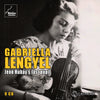
Gabriella Lengyel, this Hungarian-sounding name reminded me of something. It was under her bow that, as a child, I discovered Bartók's Duos on disc where she was talking with Anne-Marie Gründer, in a Ducretet-Thomson LP. What an emotion to find them perfectly reproduced in the imposing box that Emilio Pessina devotes to this forgotten violinist. [...] |
|
#02/2022 (UK)
This series of six volumes (33 CDs in all) has been important in drawing attention to Pietro Scarpini’s name. He was largely an absence in recording studios, his preference lying in private tapes, broadcasts and recitals, though he is remembered for his work with Furtwängler in Beethoven’s Fourth Piano Concerto, a live performance that has been released by a number of labels, not least by Rhine Classics itself. [...] This is a well compiled and formidably performed set. Restorations are excellent and the documentation is pertinent and sports some fine photographic reproductions. It marks a fitting end to the Scarpini odyssey on this label. |
 15 March 2022 | Jonathan Woolf |
|
#01/2022 (FR)
|
 January 2022 | Jean-Michel Molkhou |